
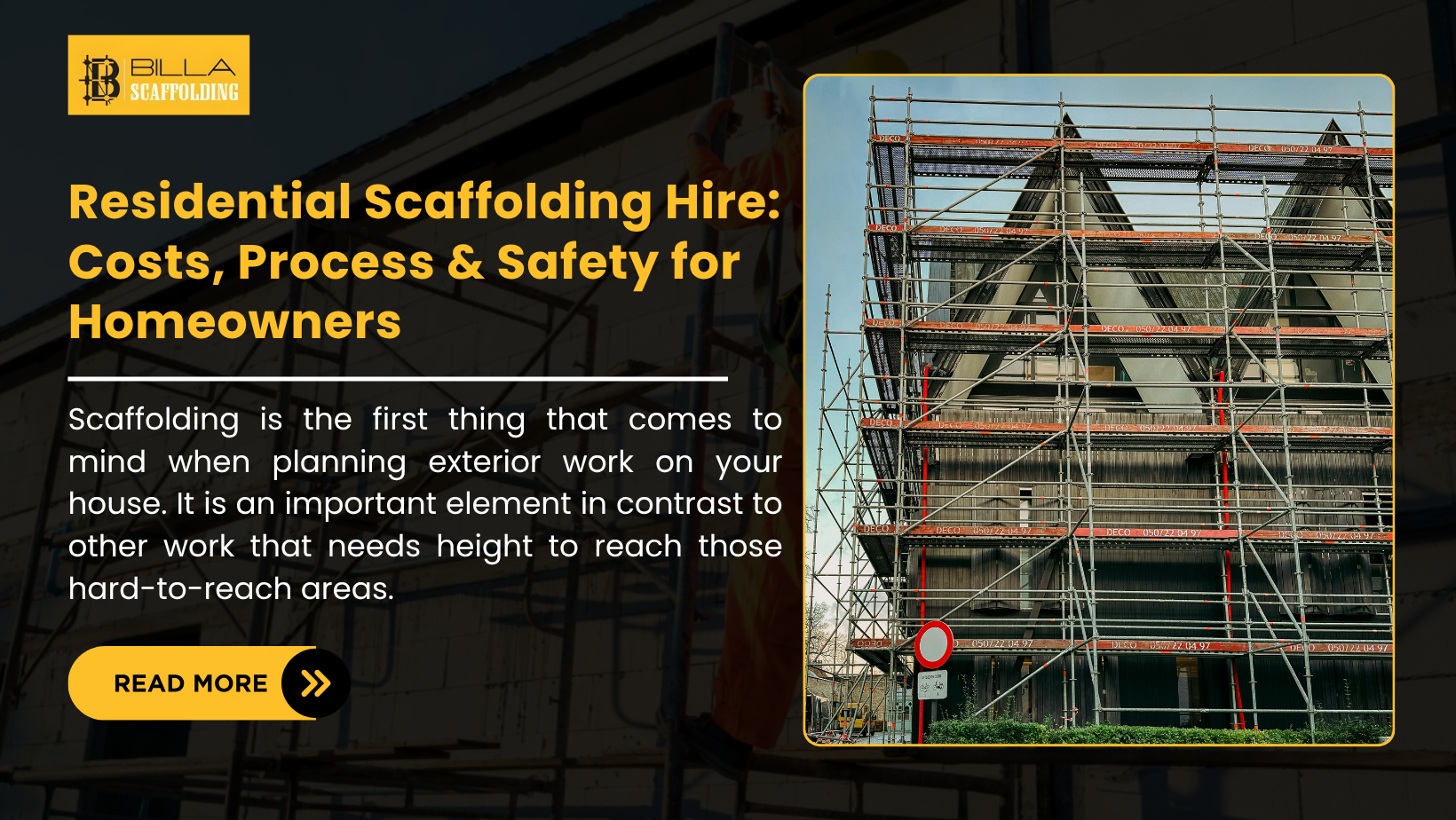
Residential Scaffolding Hire: Costs, Process & Safety for Homeowners
Scaffolding is the first thing that comes to mind when planning exterior work on your house. It is an important element in contrast to other work that needs height to reach those hard-to-reach areas. Scaffolding creates a stable platform so builders can work safely and reach areas that would otherwise be difficult or risky.
Many homeowners search for scaffolders for homes when a project starts, but the process and costs can feel a bit unclear if you’ve never hired scaffolding before.
What Is Residential Scaffolding and When Do You Need It?
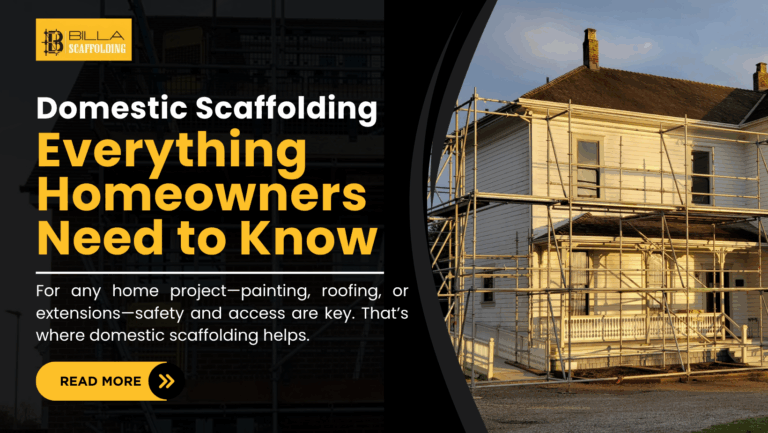
Residential scaffolding is a temporary structure built around or alongside a house to give workers safe access to higher parts of the building. Once the work is finished, it’s easily dismantled and removed.
It doesn’t damage your property, and it isn’t a sign that something is wrong with the house. It’s simply a safer and more practical way for tradespeople to reach elevated areas.
Homeowners usually need scaffolders for homes when work involves more than a quick ladder job. Common examples include:
- Roof repairs or full roof replacements
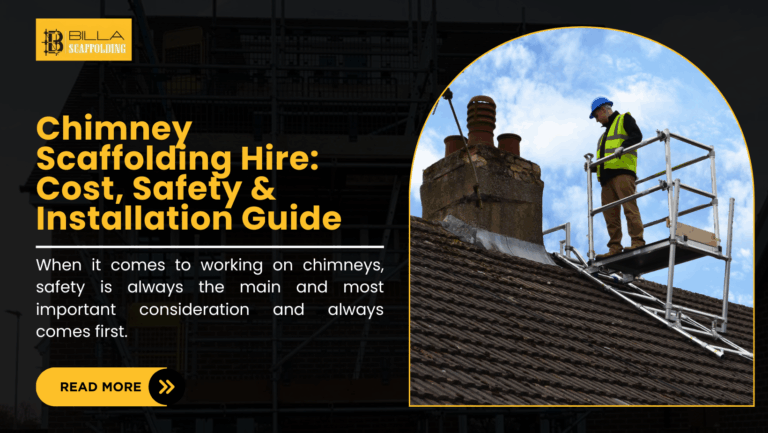
- Chimney pointing or rebuilding
- Fascia, soffit, and gutter replacements
- Exterior painting or rendering
- Loft conversions requiring external access
- Window replacements on upper floors
If someone needs to work above the first floor for several hours or days, scaffolding usually makes the job safer and easier. It also allows workers to move equipment around comfortably rather than balancing on ladders.
Why Is Scaffolding Safety So Important?
Any work at height carries some risk, which is why scaffolding plays such an important role in providing a safe, secure platform for working at heights.
Guardrails, secure boards, and stable support structures all help reduce the chance of slips or falls.
Professional scaffolders for homes are highly trained to assemble these structures so they remain stable throughout the project. They calculate weight loads, secure the framework correctly, and make sure the setup suits the specific building.
If scaffolding remains in place for several days or weeks, inspections may be carried out to ensure everything is still secure and functioning properly. For homeowners, hiring experienced scaffolders is one of the simplest ways to reduce risks for workers, neighbors, and anyone around the property.
How does the Residential Scaffolding Process Works?
If you’ve never hired scaffolding before, the process is usually very simple. Most professional scaffolders handle everything from planning to removal, so homeowners don’t need to worry about the technical details.
Here’s what typically happens.
Initial Enquiry
Start by contacting the best scaffolding company near me and explaining the type of work you need to be done. This will help with something simple, like gutter replacement, or something larger, such as a full roof repair.
Basic information about the house and the job helps the company understand what might be required.
Project Discussion
The scaffolding team will normally ask a few questions about the property. Things like the height of the building, whose sides need access, and how long the project might last. All these things have to be addressed first.
This helps them decide what type of structure will work best.
Complete Site Assessment
A scaffolding company arranges a quick site visit or asks for photos of the property. Scaffolders look at access points, the surrounding space, ground conditions, and the parts of the house where work will take place to determine what type of scaffolding is needed.
Quote and Planning
Once the assessment is completely done, the company will give you a quote explaining the expected scaffolding hire cost and the estimated scaffolding rental cost. Once the planning is done, you will receive the estimated cost for the project.
Scaffolding Installation
On the agreed date, professional scaffolders arrive with the necessary equipment and begin assembling the structure.
Project Work Period
It gives roofers, painters, or installers safe access to the higher areas of the house and allows them to move tools and materials around more easily.
Safety Checks During Use
Professional scaffolding teams monitor the setup and address any issues if adjustments are needed.
Dismantling and Removal
After the work is finished, the scaffolding company returns to dismantle the structure. The equipment is removed carefully, leaving the area around your home clear again.
For homeowners, this simple process is one of the main reasons scaffolders for homes are commonly used during exterior repairs and renovations.
What Does Scaffolding Hire Cost?
This is usually the first question homeowners ask. The truth is that scaffolding hire cost varies from one project to another. The final cost of the scaffolding depends on several factors related to the property and the work being carried out.
Factors such as:
- Size of the project
- Height required for the project
- Custom Design or Special Structures
- Duration of hire
- Safety Requirements
- Types of scaffolding used
If you’re currently searching for construction scaffolding hire near me, the team at Billa Scaffolding can help guide you through the process and provide the right setup for your home and project.
FAQ’s
The scaffolding hire cost very much depends on various factors such as the size of the house, the required height, and how long the scaffold is needed. Smaller residential projects usually cost less than large multi-level installations.
There isn’t a strict legal time limit. Most of the residential scaffolding hires last a few weeks, depending on the project timeline. After the agreed hire period, additional scaffolding rental cost charges may apply.
Yes. Some builders organise scaffolding as part of their project quote. Others may ask homeowners to arrange it separately.
This totally depends on the hire agreement you have with the scaffolding company. Most contracts include terms about damage or liability.