
House Extension Scaffolding Guide
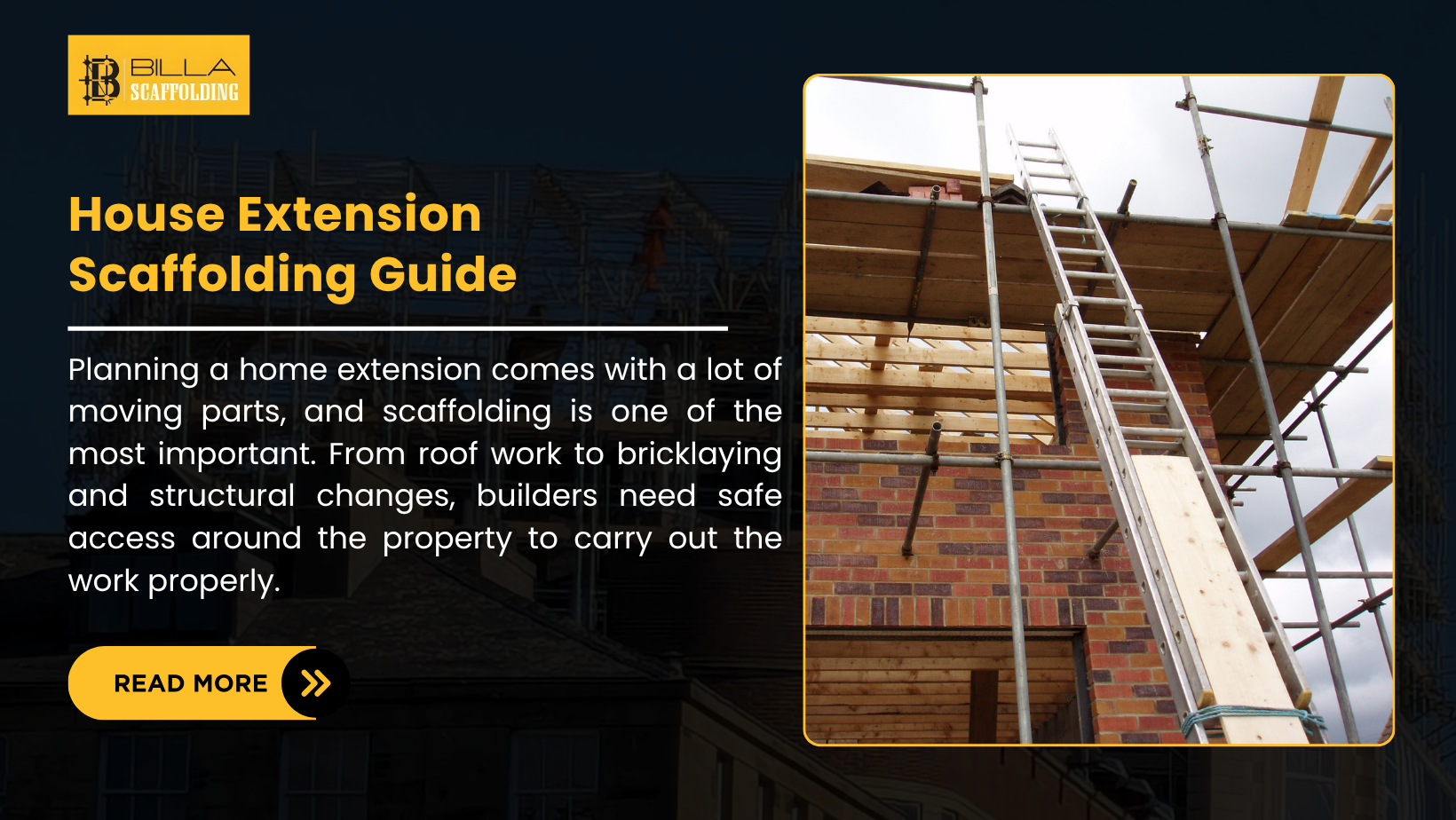
Planning a home extension comes with a lot of moving parts, and scaffolding is one of the most important. From roof work to bricklaying and structural changes, builders need safe access around the property to carry out the work properly. That is why scaffolding is commonly used on both small and large extension projects across the UK.
One of the most searched questions homeowners ask is, ‘Do I need scaffolding for extension work?’
Yes, definitely, in most cases.
When a project involves work above the ground level, such as for roof access or structural changes, scaffolding is a must.
Builders tend to recommend scaffolding because it speeds up work and makes it safer. Workers still need secure platforms for material handling and detailed work around rooflines and upper walls, even when the extension is not very high.
So if you are still asking yourself, “Do I need scaffolding for extension work?” This house extension scaffolding guide is for you.
Why Is Scaffolding Needed for House Extensions?
Every extension project involves movement, materials, and work at height. Rooflines are adjusted, walls are extended, steel beams are installed, and external finishes need to be completed safely.
The scaffolding provides the tradesmen with a safe platform to work on while the project is underway. Builders can move around safely carrying tools, timber, roof tiles and other materials instead of spending long periods of time on ladders.
It also protects the people below. It goes without saying that construction sites are inherently dangerous, especially when work is taking place above ground level. Scaffolding reduces the likelihood of accidents caused by falling materials or unstable access points. While home owners may view scaffolding as a temporary structure around their property, it actually supports almost every stage of the build.
It helps with:
- Bricklaying
- Roof installation
- Gutter work
- Chimney repairs
- Rendering and painting
- Window fitting
- Steel beam erection
One Storey Extension: The Importance of Scaffolding
Homeowners are often surprised to discover just how common single storey extension scaffolding is. Although the extension itself may only add one level to the property, there is still a large amount of work that takes place above head height.
Roofing work, drainage installation, guttering, fascia fitting, and external finishes all require secure access. Builders also need safe working platforms where the new extension joins the original property.
That is why single storey extension scaffolding is used on many rear and side extensions throughout the UK.
It allows tradespeople to:
- Install roof structures safely
- Carry materials without relying on ladders
- Access hard-to-reach areas around rooflines
- Complete external finishes more accurately
- Work safely during poor weather conditions
Another advantage is organisation; a scaffolded site usually runs more smoothly because workers can move around the build more efficiently.
Side Return Extension Scaffolding and Tight Access Areas
Homes with narrow side spaces often come with extra building challenges. This is where side return extension scaffolding becomes important.
A side return extension usually extends into the unused alleyway or narrow outdoor section beside the property. These are common in Victorian and terraced homes across the UK.
The problem is space; builders might not have enough space for materials, movement and equipment. Standard scaffolding setups do not always fit neatly into narrow gaps. The scaffolders may use:
- Slim scaffold towers
- Narrow corridors
- Temporary support facilities
- Modular access platforms
The aim is to make sure that workers have enough space to work safely and disruption to householders and neighbours is manageable. A well-planned side return extension scaffolding can also help to avoid any delays during roof work and structural changes.
How long will the scaffolding be around for?
Every extension project is different, and there is no one-size-fits-all answer. Some builds might only need scaffolding for a week or two. Larger projects may leave it for a few months.
Timeline depends on:
- Weather conditions
- Stages of a roof installation
- Materials supply
- structural work.
- Changes to the building design
Scaffolding is usually taken down in stages as sections of the extension are completed.
Get Your Scaffolding Sorted With Billa Scaffolding
Planning a house extension is a big deal, and the last thing you want is to hit a delay because the scaffolding wasn’t planned properly. At Billa Scaffolding, we work with homeowners and builders across the area to get the right scaffold up at the right time, whether it’s single storey extension scaffolding, side-return extension scaffolding, or anything in between.
We know residential jobs. We know tight access. And we know how to make the build run smoother from day one.
FAQ’s
Why is scaffolding important for house extensions?
Scaffolding is a big help for builders; it allows workers to safely reach heights while carrying out roofing, brickwork, and structural work. Scaffolding is extremely important for house extensions, as it offers safety and also helps in moving materials around the site and accessing higher parts of the property during construction.
Does single storey extension scaffolding take up a lot of space?
Not always; scaffolders normally plan the structure around the property layout so there is still enough room for workers, materials, and homeowner access during the build.
Is single storey extension scaffolding really necessary?
Yes, because the building is still being built, and construction workers still need to get safely onto parts of the roof, drainage systems and top parts of walls. Single-storey extensions can be fitted with proper scaffolding, which allows tradespeople to transport materials safely and do roofing and finishing work more efficiently.
Is scaffolding used for rear and side extensions?
Rear and side extensions normally require scaffolding. Different arrangements may be needed depending on the size of the property and the space available around the build.
Can the homeowners use the scaffolding while the extension is being built?
Scaffolding is designed for construction professionals and can become dangerous if used incorrectly. It is always safer to leave access and adjustments to the scaffolding team and builders on-site.