
When Do You Need Scaffolding for Home Repairs?
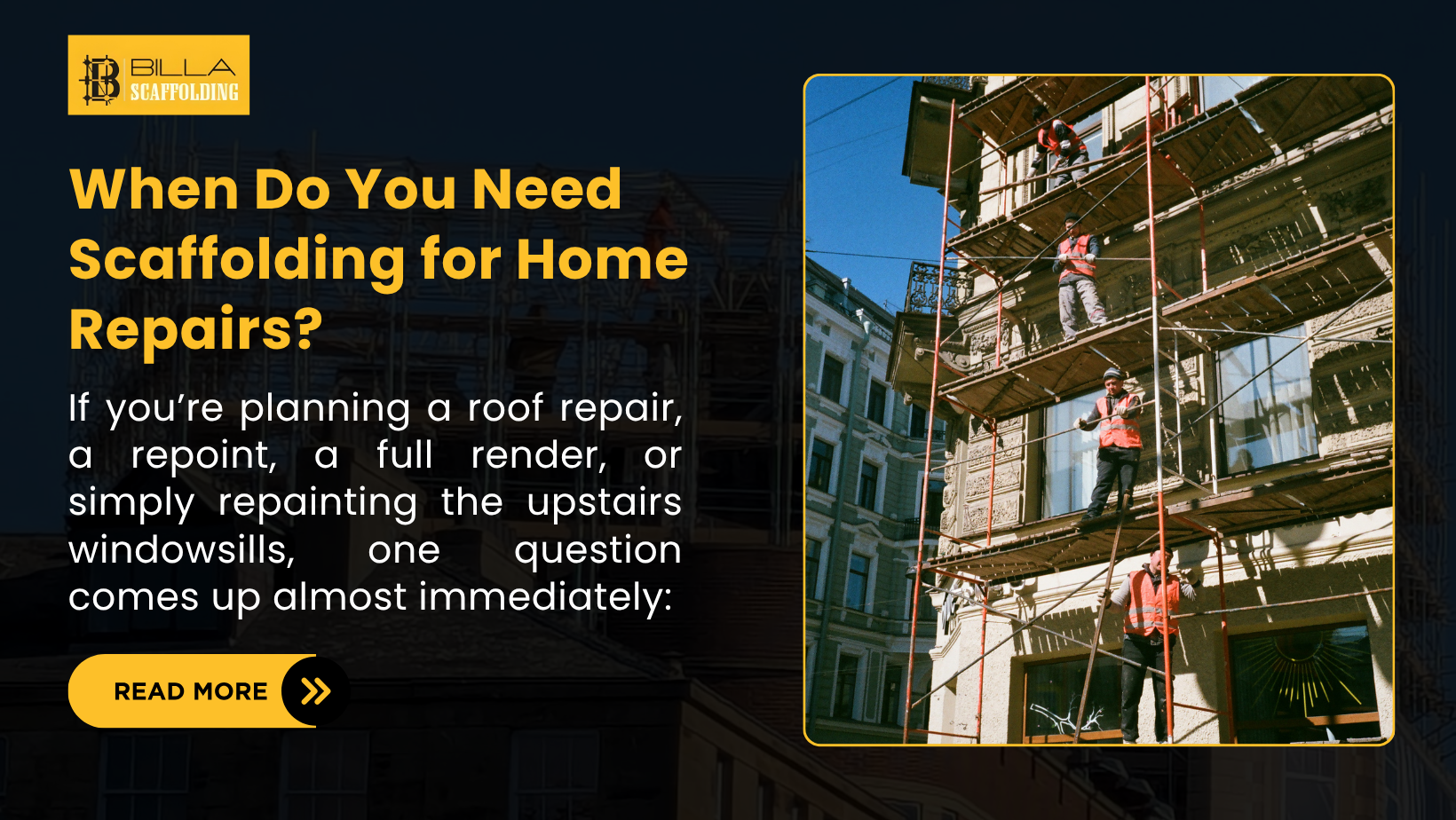
If you’re planning a roof repair, a repoint, a full render, or simply repainting the upstairs windowsills, one question comes up almost immediately: do you actually need scaffolding for the job, or will a ladder or tower do? Getting this decision right matters for your safety, your neighbours safety, and – if you skip it when it’s genuinely needed – your home insurance and any warranty on the work.
This guide walks through exactly when scaffolding for home repairs becomes necessary, what UK safety rules say about working at height on a house, roughly what it costs, and how to find scaffolders for homes you can trust in London.
What Is Scaffolding for Home Repairs?
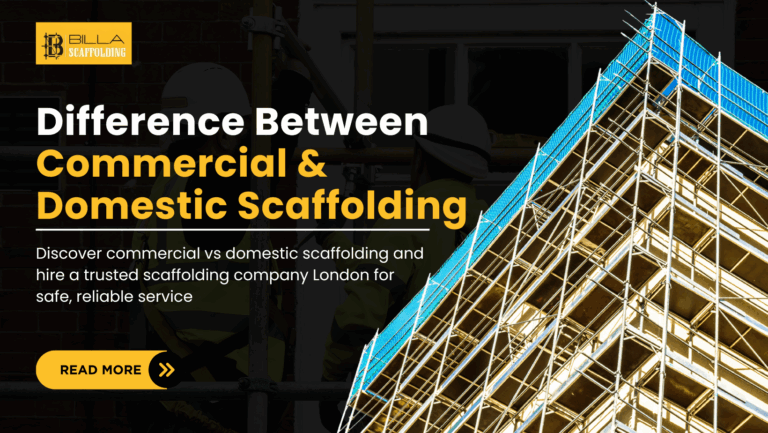
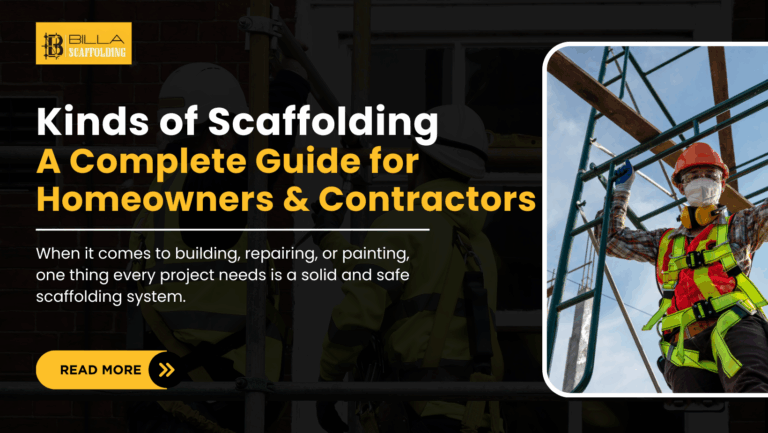
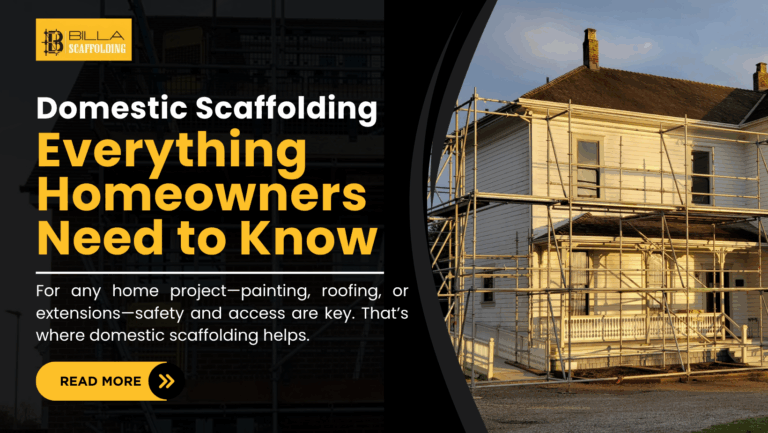
Residential scaffolding is a temporary, engineered structure erected against or around a house to give tradespeople a safe, level, and stable platform to work from at height. Unlike a ladder, which only supports one person at a limited angle for short bursts of work, scaffolding for home repairs provides:
- A flat, secure working platform at every level needed, from ground floor to roofline
- Guardrails and toe boards that prevent falls and dropped tools
- Safe access via ladders or stair towers built into the structure itself
- Space to store materials and move around freely without overreaching
This makes it the standard choice for any home repair job that isn’t a five-minute task within easy ladder reach.
When Is Scaffolding Required for House Repairs?
There’s no single legal height at which scaffolding becomes compulsory for a homeowner’s own DIY task, but the picture changes as soon as a contractor is doing the work. Under the Work at Height Regulations 2005, any employer or self-employed tradesperson must avoid working at height where possible, and where it can’t be avoided, must use the right equipment to prevent a fall. In practice, that means a professional scaffolding services provider – not a ladder – for anything involving sustained work above around two to three metres.
As a homeowner, scaffolding for home repairs is generally the right call when:
- The job takes more than an hour or two in one spot at height
- Tools, materials, or debris need to be moved up and down repeatedly
- More than one tradesperson needs to work at the same level
- The work is directly above a doorway, driveway, or path used by family or neighbours
- A ladder simply can’t reach the angle or area safely (bay windows, dormers, chimney breasts)
Do I Need Scaffolding for Roof Repairs?
Roofing is one of the clearest cases where the answer is almost always yes. Roof pitches are uneven, often slippery, and offer no safe standing area on their own. For anything beyond a very minor, short-duration fix, roofers rely on scaffolding for home repairs to give them a secure platform at eaves height, plus edge protection to stop tools, tiles, or people falling.
Typical roof jobs that call for scaffolding for roof repairs include:
- Re-tiling, re-slating, or replacing a full roof covering
- Repairing or rebuilding a chimney stack
- Fitting or replacing a temporary roof during a larger renovation
- Fixing valleys, flashing, or leadwork
- Gutter and fascia replacement along the full length of a roofline
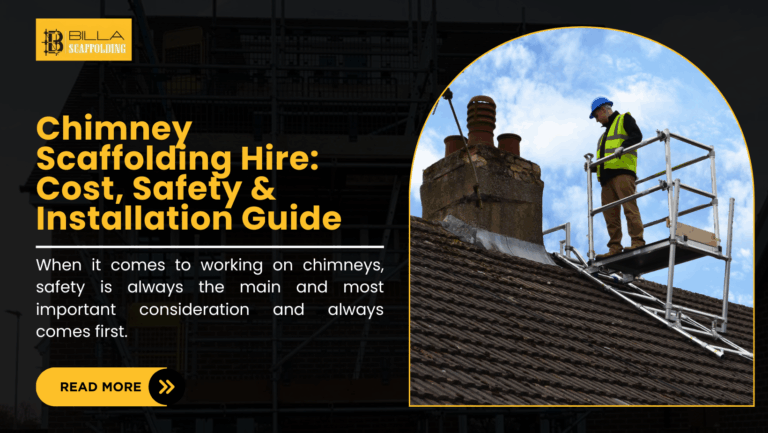
For chimney-specific work, a dedicated chimney access platform gives a stable, fully guarded working area right where it’s needed, rather than balancing on the roof pitch itself.
Seven Home Repair Jobs That Usually Need Scaffolding
- Roof repairs and re-roofing – full edge protection and safe roof access.
- Chimney repointing, rebuilding, or cleaning – stable platform at height.
- External wall rendering or repointing – even coverage without overreaching from a ladder.
- Guttering, fascia, and soffit replacement – continuous access along the roofline.
- Upper-storey window or door replacement – safe positioning for lifting heavy units.
- Loft conversions and dormer extensions – structural access plus fall protection.
- Full exterior repainting – even, sustained access to every wall section.
How Much Does Scaffolding Cost for Home Repairs?
There’s no single flat rate, because the price depends on the specifics of your property and project. The main factors that affect how much scaffolding costs for home repairs include:
- Size and height of the property (a two-storey terrace costs less to scaffold than a large detached house)
- How long you need to hire it for – most residential jobs run from a few days to several weeks
- Access to the site, including whether a public pavement or road is affected
- Complexity of the structure – bay windows, chimneys, and awkward roof shapes all add labour
- Whether extras are needed, such as a temporary roof, edge protection, or a birdcage scaffold
The only reliable way to know your figure is a free, no-obligation site survey. A trustworthy scaffolding company will always give transparent, itemised pricing with no hidden costs, rather than a rough guess over the phone.
Scaffolding Safety: What Homeowners Should Expect
Because scaffolding safety directly affects your family and anyone passing your property, it’s worth knowing what proper compliance looks like before work starts. A reputable residential scaffolding provider should:
- Hold CHAS accreditation, confirming independently assessed health and safety competence
- Employ CISRS-certified scaffolders trained to current industry standards
- Design and erect scaffolding to TG20:21 guidance and HSE requirements
- Fit full guardrails, toe boards, and secure base plates on every level
- Carry out regular safety inspections throughout the hire period
- Handle any local council permit needed if the structure touches a public footpath or road
If you’d like a full walk-through of what to check, our companion guide covers scaffolding safety tips every homeowner should know in more detail.
Finding Reliable Scaffolders for Homes
Not every scaffolding company treats residential jobs the same way they treat large commercial sites – but the safety standard should never be lower just because it’s a family home. When comparing scaffolding contractors in London, look for:
- Verifiable CHAS and CISRS credentials, not just a claim on the website
- Clear, itemised quotes with no vague “final price on completion”
- A named point of contact for the duration of the hire
- Willingness to explain the scaffold design and answer safety questions directly
- Positive local reputation across London projects, not just national marketing
Residential Scaffolding London: Local Considerations
Scaffolding in a dense city like London brings extra factors that don’t apply everywhere. Terraced housing, narrow streets, and shared boundary walls mean residential scaffolding London projects often need a permit if any part of the structure sits on a public pavement or road. A local scaffolding company that regularly works across London boroughs will already know which council to contact, how long approval typically takes, and how to design the scaffold to minimise disruption to neighbours and passing traffic.
Why Choose Billa Scaffolding for Your Home Repairs
Billa Scaffolding is a CHAS-registered, HSE-compliant scaffolding company with more than 30 years of combined industry experience, serving homeowners across London and the South East. Every job is carried out by CISRS-certified scaffolders, from an initial free site survey through to safe removal once your repairs are complete.
- Free, no-obligation site survey and transparent quote
- CHAS-accredited team working to CISRS and HSE standards
- Custom scaffold design for your property’s height, layout, and access
- Flexible hire periods to match short repairs or longer renovation projects
- Local knowledge of London permit requirements, handled on your behalf
Frequently Asked Questions
Do I always need scaffolding for a small home repair?
Not always. A short, low-level job that’s easily and safely reached by a ladder or small tower may not need full scaffolding. Once work is sustained, above roughly two to three metres, or involves multiple tradespeople, scaffolding for home repairs becomes the safer and often the legally expected option for professional contractors.
How long does residential scaffolding take to put up?
Most residential scaffolding installations take around two to four hours, depending on the size and complexity of the property. Larger or more complex homes can take longer, so your scaffolding company should confirm a timeframe during the site survey.
Will I need a permit for scaffolding at my house?
You’ll usually need a permit only if the scaffold extends onto a public pavement, road, or shared access route. Scaffolding built entirely within your own private property, such as a garden or driveway, typically doesn’t require one. A local scaffolding contractor can confirm this and manage the application for you.
How much does scaffolding cost for a typical home repair?
Cost varies with the height and size of the property, hire duration, and site access, so pricing is always project-specific. The most reliable way to get an accurate figure is a free site survey and itemised quote rather than a generic estimate.
Is it safer to use a tower instead of full scaffolding?
Mobile towers can suit very short, single-person jobs at a fixed spot, but they offer less coverage and stability than full scaffolding for anything spanning a wider area, a roofline, or multiple days of work. For roof repairs, chimney work, or full-wall access, scaffolding is the safer choice.