The Role of Scaffolding in Building Construction: An Overview of Types and Structures
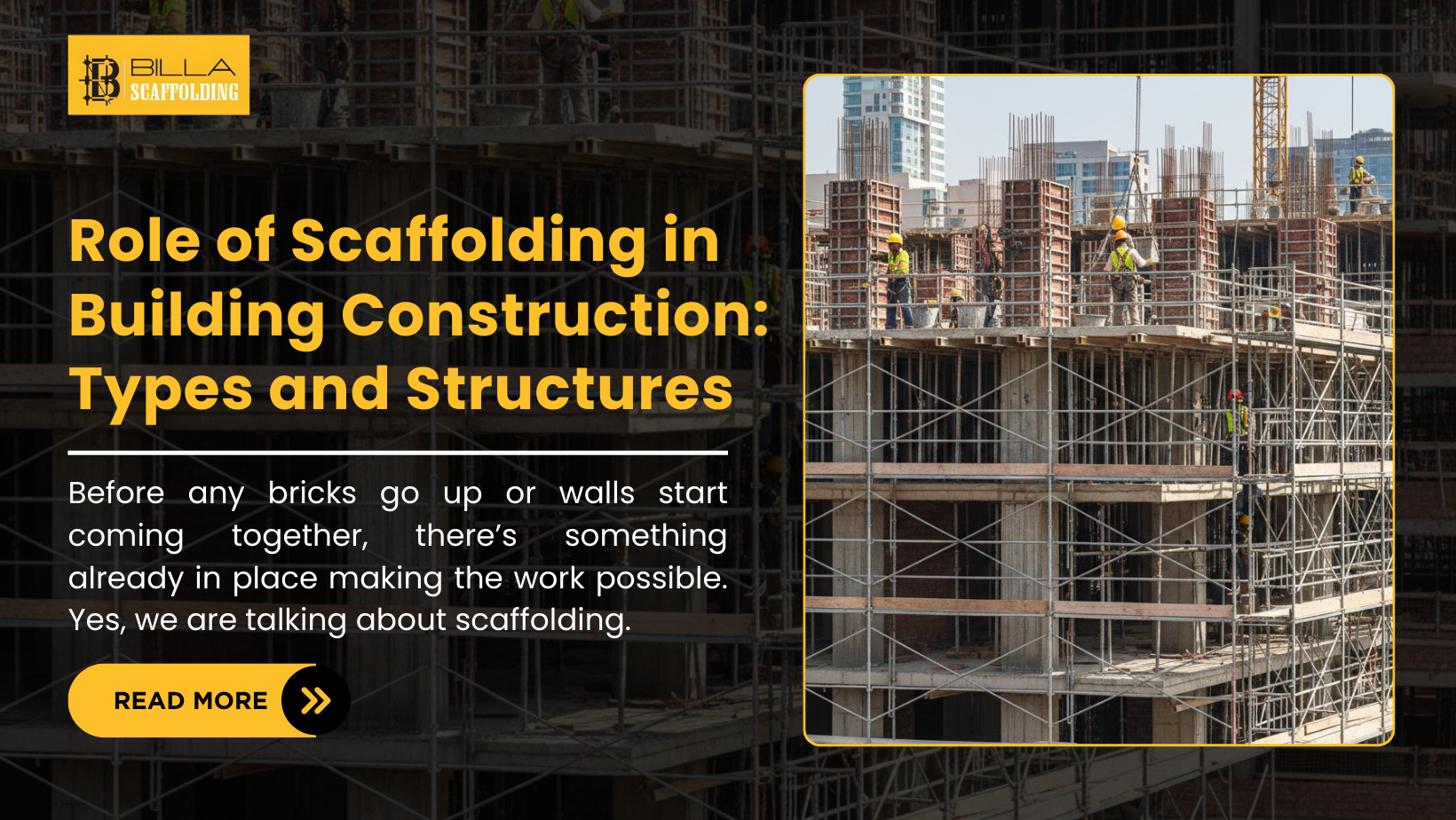
Before any bricks go up or walls start coming together, there’s something already in place making the work possible. Yes, we are talking about scaffolding. You don’t see it in the finished building, but without it, construction would be extremely unsafe and slow.
Scaffolding in building construction is a really important part; it gives workers a safe way to reach higher areas and move around comfortably. When people ask what scaffolding does, the answer is simple. It provides safe access, steady support, and a solid space to work from.
Every site uses a planned scaffolding structure that suits the building and the kind of work being done.
Why Is Scaffolding Essential on Construction Sites?
Most construction work does not just stay at ground level for long. With time the walls get taller, roofs need attention, and repairs often happen above reach. This is why construction scaffolding is such a key part of building work.
So, what does a scaffolding do on site?
scaffolding gives workers a high and really stable platform where they can stand, walk, and carry materials safely. It lowers the risk of slips and falls and keeps tools within easy reach, helping work move at a steady pace.
Basic Scaffolding Structure
- At its very core, a scaffolding structure is super simple; it is built using vertical and horizontal parts that fit together to create a firm frame. Scaffolding also adds platforms so workers have a level surface to stand and move on.
- A good and solid scaffolding structure is super strong and also very adaptable.
- In scaffolding in building construction, the structure must support weight, movement, and changing weather.
Different Scaffolding Types and Where They Are Used
Single Scaffolding
This is one of the most common scaffolding types used for everyday building work. It’s set close to walls and is simple to put together. In many home projects, this form of construction scaffolding works perfectly.
Double Scaffolding
When extra support is needed, double scaffolding is used. In scaffolding in building construction, it’s often chosen for heavier work or when more strength is required.
Cantilever Scaffolding
This type is used when the ground below can’t support a normal base. Cantilever scaffolding is a highly flexible scaffolding structure and is mainly used to reach tight or tricky spaces.
Suspended Scaffolding
Suspended scaffolding is super common on taller buildings; this is one of the scaffolding types that hangs from above. It is mostly used for repairs, painting, and cleaning jobs.
Each of these scaffolding types has a different purpose and use , making it easier to match the requirements and needs for the job or work being done.
How Does Scaffolding Support Daily Construction Work?
Let’s keep it simple. What does a scaffolding do on a daily basis?
It helps workers:
- Reach high or hard-to-reach areas safely
- Move tools and materials without strain or any risk
- Work longer on stable platforms on height without constantly shifting positions
With construction scaffolding, safety and comfort go together. A steady platform means way fewer interruptions and better focus on the task at hand.
Why is Billa Scaffolding a Trusted Choice?
Using the right scaffolding types helps workers avoid overreaching and unnecessary adjustments. It keeps the site organised and reduces risks. Professional scaffolding teams understand how construction scaffolding needs to change from one project to another. That experience shows on site and makes a real difference.
Billa Scaffolding understands really well how important the right scaffolding structure is for safe and smooth building work. We work with a wide and extensive range of scaffolding types, tailored to suit different projects.
If you are looking for trusted support in scaffolding in building construction, Billa Scaffolding offers the right mix of safety, service, and practical know-how.