
Scaffolding Safety in Construction Sites: UK Regulations, Requirements and Inspection Process
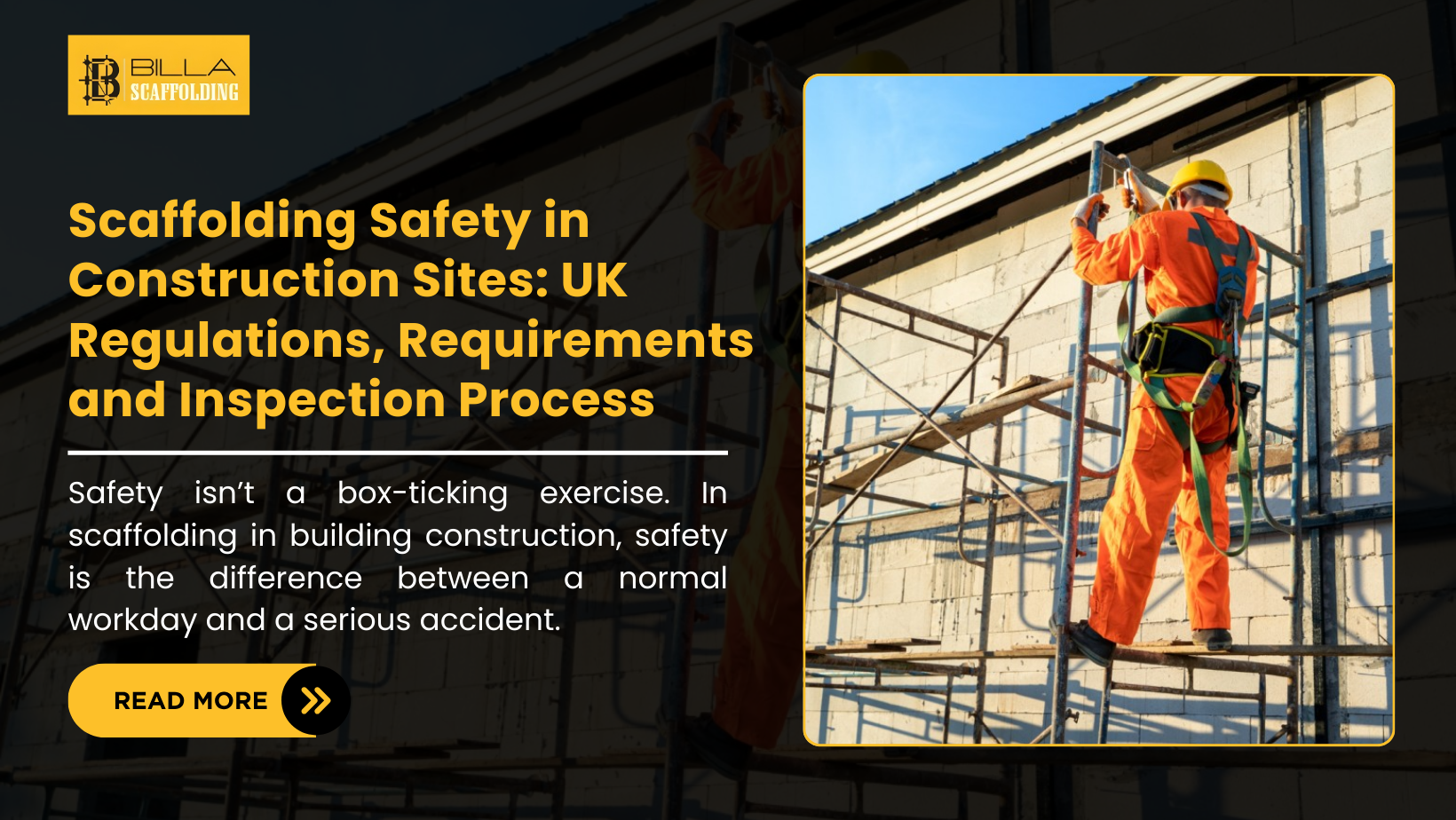
Safety isn’t a box-ticking exercise. In scaffolding in building construction, safety is the difference between a normal workday and a serious accident. Falls from height remain one of the most common site injuries in the UK, and poor construction scaffolding is often the cause.
When people understand what does a scaffolding does, they stop treating it like a temporary add-on. It’s not just metal poles and boards. The scaffolding structure becomes part of how the job gets done. It supports bricklayers, painters, roofers, and inspectors day after day.
Using the right scaffolding requirements and types also reduces pressure on workers and eases the workflow. They can focus on their task instead of worrying about balance or loose platforms.
UK Regulations for Scaffolding Safety
In the UK, scaffolding safety is not optional; construction scaffolding is strictly controlled to protect workers, site visitors, and the public. These regulations strictly apply to all scaffolding in building construction, whether it’s a small house renovation or a large commercial project.
The main rulebook comes from the Work at Height Regulations. These regulations exist to reduce the risk of falls, which are one of the biggest causes of injuries on construction sites. The law clearly states that anyone responsible for work at height must make sure the scaffolding structure is strong, stable, and suitable for the job.
Under UK law, scaffolding safety in construction sites must follow:
- The scaffolding should be designed for the type of work being carried out
- Scaffolding is to be installed by trained and competent people
- Scaffolding must be safe to use at all times
Understanding what scaffolding does under these rules is important. It is not just there to lift workers. It must provide safe access, proper working space, and protection against falls. The regulations also expect site owners to choose the correct scaffolding types based on height, load, and location.
Local councils may also require permits if construction scaffolding is placed on public roads or pavements. This is common in towns and cities across the UK and is a key legal step that cannot be ignored.
Legal Scaffolding Safety Requirements In UK
Before anyone steps onto scaffolding in building construction, several legal requirements must be met. These rules exist to make sure the scaffolding structure can safely support workers, tools, and materials.
A strong construction scaffolding setup starts from the base. If the ground is weak or uneven, the entire structure becomes unsafe.
Second, the scaffold must be properly secured to the building. Ties and supports stop movement and help the structure stay stable during daily use. Different types of scaffolding are required for different types of work, and also have different methods depending on height and exposure to wind.
Other key scaffolding requirements include:
- Guardrails to prevent falls and slips
- Toe boards to stop tools from slipping
- Safe access points like ladders or stair units
- Platforms that are fully boarded with no gaps
Scaffolding is a working platform, not a shortcut. Every part of the scaffolding structure must work together to keep people safe. Construction scaffolding must never be overloaded. The weight of workers, materials, and equipment must stay within safe limits, which is why choosing the right scaffolding types is critical.
Responsibilities on Scaffolding Safety
Scaffolding safety in construction site is shared responsibility. The law does not place it on just one person.
- Employers must provide safe construction scaffolding
- Contractors must ensure correct use
- Workers must follow safety instructions
Anyone using the scaffolding structure must report damage, loose boards, or movement immediately. Ignoring small issues can turn into serious risks really quickly.
Understanding what does a scaffolding does also means understanding how misuse can affect others. One unsafe or wrong action can compromise the entire structure, especially with taller scaffolding types.
Scaffolding Safety Inspection Process in the UK
Scaffolding inspection is one of the most important parts of construction scaffolding safety, and it is non-negotiable. In the UK, inspections are legally required and have to follow a clear schedule.
Scaffolding must be inspected:
- Scaffolding should be inspected before the very first use
- Once every seven days Scaffolding inspection is mandatory
- After bad weather, such as heavy rain or strong winds scaffolig must be checked again
- After any changes or alterations in the scaffolding
These scaffolding safety inspection apply to all scaffolding in building construction, no matter the size of the project.
During an inspection, the scaffolding structure is checked for stability, damage, and wear. Inspectors look closely at joints, boards, guardrails, and access points. They also check whether the scaffold still suits the work being done or not.
Different scaffolding types respond differently to weather and load, which is why inspections are ongoing, not one-time tasks. When people truly understand what does a scaffolding does, inspections stop feeling like delays and start feeling like protection.
Ignoring regulations or skipping inspections puts so many lives at risk. Unsafe construction scaffolding can collapse, shift, or fail at any time without warning. When rules are followed, sites run more smoothly and are much safer. Knowing what does a scaffolding does helps everyone respect its role on site. It’s not just support, it’s protection.
Work Safely with Billa Scaffolding
If you are looking for safe, reliable scaffolding safety in construction site in the UK, we at Billa Scaffolding have you covered. From small projects to full scaffolding in building construction, our team focuses on safety, stability, and clear communication.
We supply the right scaffolding types, build solid scaffolding structures, and make sure inspections are handled properly, so you don’t have to worry. Check out Billa Scaffolding today and get scaffolding that works as hard as you do, and is safe, simple, and done right.